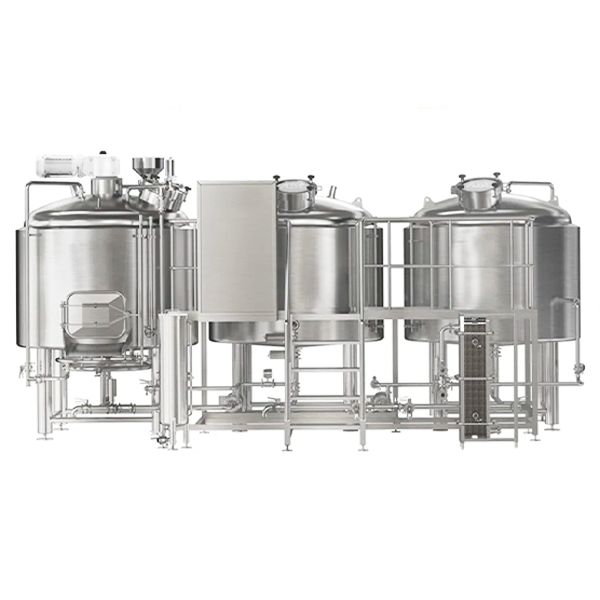
A Stainless steel fermentation vessel is one of the most important pieces of equipment in modern brewing.
Whether used in a craft brewery, commercial brewery, distillery, or pilot production setup, this type of vessel plays a central
role in producing consistent, clean, and high-quality fermentation results. Breweries around the world rely on stainless steel
because it supports sanitary processing, stable temperature control, long service life, and reliable performance across a wide
range of beer styles and fermentation methods.
For businesses searching for a durable and efficient fermentation vessel for brewing, stainless steel remains the
industry standard for quality-focused production. It is widely used for ale fermentation, lager fermentation, high-gravity brewing,
specialty yeast programs, and controlled maturation. In addition to beer production, stainless steel fermentation tanks are also
used in cider, kombucha, wine, and other beverage fermentation processes where hygiene, durability, and process control are essential.
What Is a Stainless Steel Fermentation Vessel?
A stainless steel fermentation vessel is a sealed or semi-sealed container designed to hold wort or other fermentable liquids
while yeast or other microorganisms convert sugars into alcohol, carbon dioxide, and flavor compounds. In brewing, the vessel must
maintain a controlled environment that protects the product from contamination while allowing fermentation gases to escape safely.
The vessel is typically made from food-grade stainless steel, commonly SS304 or SS316, both known for corrosion resistance,
sanitary performance, and long-term reliability. Depending on the application, a fermentation vessel may include cooling jackets,
pressure-rated construction, sampling ports, racking ports, manways, valves, CIP spray balls, thermowells, and other accessories
designed to support efficient brewing operations.
Why Stainless Steel Is Preferred in Brewing
Stainless steel is preferred because it offers the ideal combination of hygiene, strength, durability, and process stability.
Compared with plastic, wood, or lower-grade metals, stainless steel provides a more controlled and professional fermentation
environment. It does not absorb odors, flavors, or contaminants, making it easier to clean and sanitize between batches.
Brewing quality depends on consistency. Stainless steel helps reduce variables that could affect fermentation performance or final
flavor. Its smooth surface minimizes microbial buildup, while its structural strength supports pressure fermentation and temperature
management. For breweries that prioritize repeatable results, stainless steel is a practical and dependable choice.
Key Advantages of Stainless Steel Fermentation Vessels
Advantage |
Description |
Why It Matters for Brewing |
|---|
Sanitary Surface |
Smooth, non-porous stainless steel resists bacterial buildup. |
Helps protect beer quality and reduce contamination risk. |
Corrosion Resistance |
Food-grade stainless steel withstands moisture, acids, and cleaning agents. |
Supports long-term durability in demanding brewery environments. |
Temperature Control |
Compatible with cooling jackets and glycol systems. |
Allows accurate fermentation control and flavor consistency. |
Pressure Capability |
Many vessels can be designed for pressurized fermentation. |
Useful for carbonation, closed transfers, and advanced brewing methods. |
Easy Cleaning |
Designed for CIP cleaning and fast sanitation cycles. |
Improves operational efficiency and reduces downtime. |
Long Service Life |
High mechanical strength and wear resistance. |
Lower replacement frequency and stronger long-term value. |
Professional Appearance |
Bright, polished finish supports a clean industrial look. |
Ideal for visible brewery environments and brand presentation. |
How a Stainless Steel Fermentation Vessel Supports High Quality Brewing Results
High quality brewing depends on precise fermentation management. A well-designed stainless steel fermentation vessel supports this
process by maintaining ideal conditions for yeast activity. Temperature stability is especially important because yeast behavior
changes significantly with heat and cold. When fermentation is too warm, unwanted flavors may develop. When it is too cold, yeast
may become sluggish or stop early. Stainless steel vessels with cooling jackets help brewers maintain stable fermentation profiles.
In addition to temperature control, stainless steel vessels help brewers preserve product purity. Because the material is non-reactive
and easy to sanitize, the vessel does not introduce unwanted flavors, metals, or odors. This is particularly important in clean,
delicate beer styles such as pilsners, lagers, blond ales, and pale ales, where fermentation character must remain balanced and
precise.
Stainless steel also supports consistency from batch to batch. Commercial breweries often produce large volumes under strict quality
standards. A reliable fermentation vessel helps reduce batch variation by providing uniform heat transfer, secure seals, and a
controlled environment. This consistency is essential for breweries building product reputation and brand trust.
Common Types of Stainless Steel Fermentation Vessels
Stainless steel fermentation vessels are available in several configurations depending on brewery size, production goals, and
fermentation style. Understanding the main vessel types can help brewers choose the right equipment for their workflow.
Type |
Main Use |
Typical Features |
|---|
Conical fermenter |
Beer fermentation and yeast Harvesting |
Conical bottom, yeast dump valve, cooling jacket, sampling port |
Unitank |
Fermentation and conditioning in one tank |
Pressure-rated, carbonation stone, jacketed body, CIP system |
Open Fermenter |
Traditional fermentation styles |
Open top, easy access, sanitary stainless construction |
Brite Tank |
Conditioning, clarification, carbonation, and storage |
Pressure-rated, polished interior, carbonation fittings |
Small-Batch Fermenter |
Pilot brewing, R&D, and test batches |
Compact size, flexible fittings, easy handling |
industrial fermentation tank |
Large-scale production |
Heavy-duty structure, automation compatibility, advanced cooling |
Important Features to Look for in a Brewing Fermentation Vessel
Not all stainless steel fermentation vessels are built the same. The best choice depends on the brewing process, batch size, and
quality standards. Below are important features to evaluate when selecting a vessel for high quality brewing results.
- Food-grade stainless steel: SS304 is widely used, while SS316 offers enhanced corrosion resistance for more demanding environments.
- Polished interior surface: A smooth finish reduces residue buildup and supports sanitation.
- Cooling jacket: Essential for accurate temperature management during fermentation.
- Pressure rating: Useful for closed fermentation, natural carbonation, and advanced brewing workflows.
- Proper vessel geometry: Cone angle, diameter, and height affect yeast harvesting and sediment separation.
- CIP capability: Enables efficient cleaning and sanitation without manual disassembly.
- Secure fittings: Ports, valves, and seals should be durable and easy to maintain.
- Thermowell and sensor compatibility: Supports accurate monitoring of fermentation temperature.
- Sampling port: Allows quality checks without exposing the product to unnecessary contamination.
- Insulated design: Helps improve temperature stability and energy efficiency.
Standard Stainless Steel Grades Used in Fermentation Vessels
Stainless steel fermentation vessels are generally manufactured from specific grades selected for food safety, corrosion resistance,
and mechanical strength. Two of the most common grades are SS304 and SS316.
Stainless Steel Grade |
Characteristics |
Typical Brewing Application |
|---|
SS304 |
Excellent general corrosion resistance, widely available, cost-effective |
Most brewery fermentation tanks and standard brewing systems |
SS316 |
Higher resistance to chlorides and aggressive cleaning environments |
Applications with stronger chemicals or more demanding sanitary requirements |
SS316L |
Low-carbon version of 316 with improved weld performance and corrosion resistance |
Precision sanitary systems and premium brewing equipment |
How Vessel Design Affects Fermentation Quality
The design of a fermentation vessel has a direct impact on brewing performance. Features such as cone angle, headspace volume,
pressure capability, and cooling surface area all influence how yeast behaves and how efficiently fermentation progresses.
For example, a conical bottom allows yeast and trub to collect at a central point, making it easier to remove sediment after
fermentation. This helps improve clarity and simplifies yeast recovery. A jacketed body improves thermal control by allowing
chilled glycol or other cooling media to circulate around the vessel. This reduces temperature swings that can negatively affect
flavor development.
The interior finish also matters. A polished, sanitary surface helps prevent residue from sticking to the vessel wall. This makes
cleaning faster and lowers the chance of contamination. In high quality brewing, even small improvements in sanitation and process
stability can lead to better taste, aroma, and batch consistency.
Typical Specifications of a Stainless Steel Fermentation Vessel
The following table provides a general reference for common specifications found in stainless steel fermentation vessels used in
brewing. Exact details vary by design, application, and production scale.
Specification |
Common Range / Option |
Function in Brewing |
|---|
Material |
SS304, SS316, SS316L |
Food-safe construction and corrosion resistance |
Capacity |
Small pilot volumes to industrial-scale tanks |
Matches brewery production needs |
Surface Finish |
Polished sanitary finish |
Reduces contamination risk and eases cleaning |
Insulation |
Optional insulated shell |
Improves temperature stability |
Cooling System |
Single-zone or multi-zone jacket |
Controls fermentation temperature |
Pressure Rating |
Atmospheric or pressure-rated |
Supports closed fermentation and carbonation |
Manway |
Top or side access |
Allows inspection and internal access |
Valves and Ports |
Sampling, racking, yeast discharge, CIP ports |
Supports brewery workflow and sanitation |
Sensor Integration |
Thermowell, level sensor, pressure gauge |
Enables monitoring and control |
Mobility |
Fixed or movable base |
Improves installation flexibility |
Applications in Brewing and Beverage Production
Stainless steel fermentation vessels are used across many beverage industries. In brewing, they are suitable for a wide variety of
beer styles and production methods. From clean lagers to hop-forward ales, a stainless steel tank supports controlled fermentation
and efficient process handling. They are also used for specialty fermentation projects where stable temperature control and sanitary
design are critical.
Beyond beer, these vessels are commonly used in cider production, hard seltzer production, mead, kombucha, distilled spirit wash
preparation, and wine fermentation. The same features that benefit brewers—sanitation, durability, and temperature stability—also
make stainless steel a strong choice for beverage producers who need reliable fermentation equipment.
Benefits for Commercial Breweries
Commercial breweries need equipment that can handle repeated use without losing performance. Stainless steel fermentation vessels
are designed for this type of environment. Their robust construction supports frequent cleaning, loading, unloading, and thermal
cycling. This makes them ideal for breweries focused on output, quality, and operational efficiency.
Another major benefit is scalability. As production grows, stainless steel vessel systems can be expanded with additional tanks,
larger capacities, or integrated automation. This flexibility makes it easier for breweries to increase volume while maintaining
consistent product standards. For many operations, stainless steel is not just a vessel material—it is a foundation for long-term
brewing growth.
Benefits for Craft and Microbreweries
Craft breweries often seek strong flavor control, frequent recipe development, and high presentation standards. A stainless steel
fermentation vessel supports these goals by making it easier to manage temperature, test new recipes, and preserve clean flavor
profiles. Small and medium breweries also benefit from the vessel’s professional appearance and long working life.
Because craft breweries may produce multiple styles in smaller volumes, equipment flexibility is especially valuable. Stainless steel
vessels can be configured for different batch sizes and fermentation methods, making them a practical option for breweries that want
both creativity and repeatability.
Cleaning and Maintenance Best Practices
Proper cleaning is essential for maintaining beer quality and extending equipment life. Stainless steel fermentation vessels are
typically designed for clean-in-place systems, which use spray balls, circulation loops, and controlled cleaning cycles to remove
residue efficiently. Regular sanitation helps protect against contamination and flavor carryover.
Maintenance should include inspection of gaskets, valves, welds, fittings, and seals. Surfaces should be checked for damage or
buildup. Although stainless steel is highly durable, breweries should still use appropriate cleaning chemicals and follow recommended
handling procedures to preserve the finish and ensure hygienic performance.
How to Choose the Right Fermentation Vessel
Choosing the right stainless steel fermentation vessel requires balancing production goals, floor space, budget, and process needs.
Start by determining the required batch size and whether the tank will be used for primary fermentation, conditioning, or both.
Then consider whether pressure capability, cooling jackets, and automation support are necessary for the brewing workflow.
It is also important to evaluate the vessel’s interior finish, drain design, port placement, and compatibility with existing brewery
infrastructure. A properly chosen vessel can improve fermentation consistency, reduce labor, and support better final product quality.
The right equipment should fit both current production needs and future expansion plans.
SEO-Friendly Summary of Core Keywords
For content development, directory pages, and brewery equipment category pages, the following keyword themes are commonly associated
with this topic:
Frequently Discussed Benefits in Brewery Equipment Pages
Industry pages often highlight a few recurring advantages when describing a stainless steel fermentation vessel. These include
sanitary design, long service life, process consistency, improved thermal management, and compatibility with Modern brewing systems.
These points are especially relevant to searchers comparing brewing tanks and looking for equipment that can support both efficiency
and product quality.
Another frequently mentioned benefit is professional workflow. A well-designed fermentation tank can simplify cleaning, sampling,
yeast harvesting, and transfer operations. This helps breweries save time while maintaining high sanitary standards. In competitive
brewing markets, operational efficiency is often closely linked to product quality and profitability.
Conclusion
A stainless steel fermentation vessel for high quality brewing results is a foundational asset for any brewery that
values sanitation, consistency, durability, and flavor control. From craft breweries to large-scale production facilities, stainless
steel remains the preferred material for fermentation because it supports clean processing, precise temperature management, and
reliable long-term use.
When properly selected and maintained, a stainless steel fermentation vessel can improve brewing efficiency, help protect product
quality, and support repeatable fermentation performance across many beverage applications. For businesses building SEO-focused
brewery equipment pages, this topic offers strong relevance, broad industry interest, and clear keyword value for organic search
visibility.
 +86 29-87031531





 Điện thoại
Bình luận
(0)