How Fermentation vessel Improves Brewing Process Optimization
Fermentation is one of the most important stages in beer production, and the choice of a fermentation vessel has a direct impact on
brewing process optimization. For breweries of all sizes, from small craft operations to large-scale production facilities,
the fermentation vessel determines how efficiently wort is converted into beer, how consistently yeast performs, and how well critical quality parameters
are controlled. A well-designed fermentation vessel supports better temperature management, reduced contamination risk, improved yeast health,
higher batch consistency, and more predictable production planning.
In modern brewing, process optimization is not only about making beer faster. It is about improving overall efficiency, protecting flavor integrity,
reducing waste, lowering operating costs, and increasing repeatability from batch to batch. The fermentation vessel plays a central role in all of these
goals. Breweries that focus on vessel design, vessel capacity, sanitary construction, cooling performance, and process control can achieve stronger
fermentation outcomes and better long-term brewing efficiency.
This article provides an SEO-friendly, industry-focused overview of fermentation vessels, their functions, advantages, key specifications, and how
they support brewing process optimization. It is intended for use in blog posts, category pages, industry pages, and educational brewing content.
What Is a Fermentation Vessel?
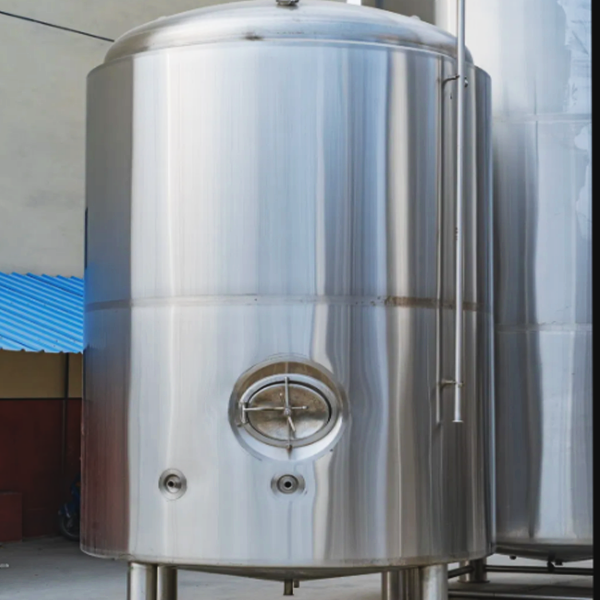
A fermentation vessel is a specialized container used to hold wort during fermentation, the stage in which yeast converts sugars into
alcohol, carbon dioxide, and flavor compounds. In brewing, fermentation vessels are designed to provide a controlled environment where temperature,
pressure, sanitation, and yeast activity can be managed precisely.
Fermentation vessels are available in many forms, including open fermentation tanks, closed cylindrical tanks, cylindroconical tanks, unitanks,
and specialized fermentation and maturation systems. Each type serves a different production purpose, but all are designed to improve consistency and
support efficient beer production.
The role of the fermentation vessel goes beyond simple storage. It is an active process tool that influences yeast performance, flavor development,
fermentation speed, and overall brewery workflow. Because of this, vessel selection is an important decision in brewing process optimization.
Why Fermentation Vessel Design Matters in Brewing Process Optimization
Brewing process optimization requires control, consistency, and scalability. The fermentation stage is highly sensitive to changes in temperature,
oxygen exposure, vessel geometry, and cleaning effectiveness. A properly engineered fermentation vessel helps breweries maintain stable conditions and
reduce production variability.
Vessel design matters because it affects:
- Temperature stability during active fermentation
- Yeast sedimentation and removal efficiency
- Headspace management and foam control
- Sanitation and contamination prevention
- Batch-to-batch consistency
- Production scheduling and tank turnover
- Energy efficiency and process automation
In practice, the right fermentation vessel can improve throughput, reduce downtime, and simplify brewery operations. This creates a direct link between
vessel performance and business efficiency.
Key Ways a Fermentation Vessel Improves Brewing Process Optimization
1. Better Temperature Control
Yeast performance is highly temperature-dependent. If fermentation temperatures rise too quickly or fluctuate too much, the beer may develop off-flavors,
inconsistent attenuation, or unwanted ester and fusel alcohol formation. A modern fermentation vessel typically includes cooling jackets or internal
temperature control systems that allow brewers to maintain stable fermentation conditions.
This temperature control helps optimize:
- Yeast metabolism
- Fermentation speed
- Flavor profile consistency
- Final beer quality
- Energy usage during cooling
Stable temperature management is one of the most important advantages of using a high-quality fermentation vessel in brewing process optimization.
2. Improved Yeast Performance
The fermentation vessel provides the environment in which yeast does its work. If the vessel supports proper mixing, pressure release, and thermal
stability, yeast can ferment more efficiently and predictably. This leads to better sugar conversion, more reliable attenuation, and cleaner flavor
development.
Optimized vessel conditions can also improve:
- Yeast viability
- Yeast repitching potential
- Fermentation completion rates
- Reduced stress on yeast cells
Healthy yeast management is a major factor in efficient brewing operations. A suitable fermentation vessel supports yeast behavior and helps
breweries reduce process uncertainty.
3. Reduced Contamination Risk
Contamination is one of the biggest threats to brewing process efficiency. Wild yeast, bacteria, and other microorganisms can spoil an entire batch,
causing product loss, extra cleaning, and production delays. Fermentation vessels designed with sanitary finishes, sealed fittings, and clean-in-place
compatibility significantly reduce contamination risk.
A sanitary fermentation vessel improves optimization by:
- Minimizing batch failure rates
- Supporting hygienic brewing standards
- Reducing labor associated with manual cleaning
- Improving product safety and shelf stability
In modern brewing, sanitation is not optional. Vessel hygiene is directly connected to product quality and operational efficiency.
4. More Consistent Batch Quality
Consistency is a core requirement for breweries that want to optimize production. Fermentation vessel design helps deliver stable conditions from batch
to batch, which leads to more repeatable flavor, aroma, alcohol content, carbonation potential, and mouthfeel.
Batch consistency is supported by:
- Uniform tank geometry
- Repeatable thermal behavior
- Precise pressure management
- Controlled yeast separation
- Standardized process settings
When the fermentation vessel performs consistently, the brewery can build a more reliable process and reduce quality variation across production runs.
5. Faster Production Turnaround
Efficient fermentation vessels help breweries move from one batch to the next more quickly. Faster tank turnover means higher production capacity without
necessarily expanding the facility footprint. This is especially valuable for breweries operating in competitive markets where demand changes frequently.
Turnaround efficiency can improve through:
- Better yeast management
- Effective cooling and temperature recovery
- Improved drainage and solids removal
- Easy access for inspection and cleaning
By reducing idle time between batches, the fermentation vessel contributes directly to higher throughput and better process optimization.
6. Enhanced Pressure and Carbonation Control
Closed fermentation vessels allow brewers to manage pressure more accurately. In some brewing processes, pressure control helps influence fermentation speed,
reduce volatilization of aroma compounds, and support carbonation retention. For breweries using pressure fermentation or integrated maturation,
vessel design becomes even more important.
Pressure management benefits include:
- More controlled fermentation behavior
- Reduced oxygen exposure
- Improved product protection
- Potential integration with carbonation and maturation
Types of Fermentation Vessels Used in Brewing
Different brewing operations require different types of fermentation vessels. The ideal vessel depends on scale, beer style, production goals,
automation level, and available floor space.
Fermentation Vessel Type |
Main Characteristics |
Common Brewing Use |
Process Optimization Benefit |
|---|
Open Fermentation Tank |
Open-top design, traditional approach, easy surface access |
Some traditional beer styles |
Simple monitoring and yeast observation |
Closed Cylindrical Tank |
Sealed vessel, controlled environment, sanitary construction |
General craft and commercial brewing |
Reduced contamination and better control |
Cylindroconical Tank |
Cylindrical body with conical bottom for yeast collection |
Modern breweries and high-efficiency systems |
Efficient yeast Harvesting and solid separation |
Unitank |
Combined fermentation and maturation capability |
Space-efficient brewery operations |
Fewer transfers and shorter processing cycles |
Pressure Fermentation Vessel |
Designed to withstand internal pressure during fermentation |
Advanced brewing and specialty process control |
Improved pressure management and product stability |
Important Specifications of a Fermentation Vessel
When evaluating fermentation vessels for brewing process optimization, breweries often consider a set of technical specifications. These specifications
influence usability, performance, sanitation, and long-term operating efficiency.
Specification |
Why It Matters |
Typical Optimization Impact |
|---|
Material Grade |
Usually Stainless steel for durability and sanitation |
Long service life and hygiene support |
Tank Volume |
Determines batch size and production capacity |
Better output planning and scale matching |
Cooling Jacket |
Helps maintain controlled fermentation temperature |
Improved yeast performance and consistency |
Conical Bottom Angle |
Affects yeast collection and solid removal |
More efficient yeast harvesting |
Pressure Rating |
Indicates vessel resistance to internal pressure |
Safer closed fermentation and carbonation support |
Surface Finish |
Smooth internal finish supports sanitation |
Reduced contamination risk |
Insulation |
Helps preserve stable vessel temperature |
Lower energy loss and better thermal stability |
Manways and Ports |
Provide access for inspection and cleaning |
Faster maintenance and cleaning workflow |
Automation Compatibility |
Supports sensors, valves, and control systems |
Improved process monitoring and control |
Advantages of Using a High-Quality Fermentation Vessel
A high-quality fermentation vessel delivers several operational advantages that support brewing process optimization across the full production cycle.
Operational Advantages
- Better repeatability: Consistent vessel performance leads to more predictable fermentation outcomes.
- Reduced waste: Lower contamination risk and fewer process failures reduce batch losses.
- Improved efficiency: Faster tank turnover and easier process management improve brewery productivity.
- Stronger quality control: Accurate temperature and pressure control help maintain product standards.
- Lower maintenance burden: Sanitary construction and durable materials reduce long-term upkeep issues.
- Scalable production: A suitable vessel system allows breweries to grow without sacrificing consistency.
Product Quality Advantages
- Cleaner fermentation character
- Reduced off-flavor risk
- More stable alcohol content
- Better aroma retention
- Improved clarity and sediment handling
These advantages make the fermentation vessel one of the most important assets in brewing process optimization.
How Fermentation Vessel Supports Energy and Cost Efficiency
Brewing process optimization is also about resource management. Fermentation vessels can reduce operational costs by improving energy efficiency,
lowering labor requirements, and minimizing batch rework. Temperature control systems that are properly designed help reduce unnecessary energy use,
while efficient cleaning systems can shorten downtime and reduce water and chemical consumption.
Cost efficiency benefits may include:
- Reduced refrigeration waste through stable thermal control
- Lower labor cost due to easier cleaning and maintenance
- Less product loss from contamination or fermentation failure
- Better scheduling efficiency from predictable process timing
- Longer vessel service life through durable construction
For breweries focused on profitability, the fermentation vessel is not just a container. It is a process optimization tool that supports long-term cost control.
Fermentation Vessel and Brewing Automation
Automation is increasingly important in brewery process optimization. Modern fermentation vessels can be integrated with temperature sensors, pressure
gauges, automated cooling loops, level indicators, sampling ports, and digital process controls. This allows brewers to monitor fermentation more
accurately and make adjustments based on real-time data.
Automation benefits include:
- More accurate fermentation tracking
- Fewer manual errors
- Improved record keeping
- Faster response to process changes
- Greater production consistency
As breweries scale up, automation-compatible fermentation vessels become increasingly valuable because they support more controlled and repeatable operations.
Best Practices for Brewing Process Optimization with Fermentation Vessels
To get the best results from a fermentation vessel, breweries should adopt process best practices that support both equipment performance and yeast health.
Best Practice |
Description |
Optimization Result |
|---|
Monitor Temperature Continuously |
Track fermentation temperature throughout the batch |
More stable yeast activity |
Maintain Strong Sanitation |
Clean and sanitize vessel surfaces and fittings regularly |
Lower contamination risk |
Control Oxygen Exposure |
Limit unnecessary oxygen contact after wort transfer |
Better flavor stability |
Use Appropriate Vessel Sizing |
Match vessel volume to production goals |
Efficient batch planning |
Manage Yeast Properly |
Harvest, store, and repitch yeast carefully |
Higher fermentation reliability |
Inspect Seals and Valves |
Check components for wear or leakage |
Improved process safety and control |
Common Brewing Applications for Fermentation Vessels
Fermentation vessels are used across a broad range of beer production environments. Their function remains the same, but their design and operational
settings may vary depending on the brewery type and product style.
- Craft breweries: Support flexible batch production and style experimentation
- Microbreweries: Optimize limited space and smaller batch sizes
- Commercial breweries: Enable larger volume production and tighter process control
- Specialty breweries: Support unique fermentation profiles and pressure-based processes
- Contract brewing facilities: Improve consistency across varied client recipes
In each of these environments, the fermentation vessel helps align production goals with quality expectations and operational efficiency.
How to Choose the Right Fermentation Vessel for Brewing Optimization
Selecting the right fermentation vessel requires balancing technical performance, production scale, sanitation needs, and budget. The best choice is
the one that supports the brewery’s current workflow while also leaving room for future growth.
Important selection factors include:
- Desired batch size
- Available floor space
- Cooling and insulation requirements
- Need for pressure fermentation
- Cleaning and maintenance preferences
- Integration with automation systems
- Yeast harvesting and solid removal requirements
- Long-term expansion plans
By aligning vessel features with operational goals, breweries can improve process optimization from fermentation through packaging.
Fermentation Vessel Role in Brewing Quality Control
Quality control is a major component of brewing process optimization, and the fermentation vessel is one of the main control points in the brewery.
Because fermentation affects final alcohol levels, residual sweetness, carbonation potential, and flavor balance, precise vessel control is essential.
A fermentation vessel supports quality control by enabling:
- Repeatable fermentation curves
- Accurate sampling during the process
- Better observation of yeast activity
- Controlled maturation and clarification
- More reliable final product consistency
In well-managed brewing systems, the fermentation vessel becomes a central quality checkpoint rather than a passive container.
Summary: Why Fermentation Vessel Is Essential for Brewing Process Optimization
The fermentation vessel is a core brewing asset that influences nearly every aspect of process optimization. From temperature control and sanitation to
yeast performance and production efficiency, the vessel helps breweries improve consistency, reduce waste, and strengthen product quality.
For breweries aiming to optimize operations, the right fermentation vessel offers clear advantages:
- Stable fermentation conditions
- Better yeast management
- Improved contamination prevention
- More consistent beer quality
- Faster batch turnaround
- Greater energy and labor efficiency
- Stronger scalability for future production growth
In short, a fermentation vessel is far more than a holding tank. It is a performance-driven brewing system that helps unlock better process control,
more efficient operations, and higher-quality beer production. For any brewery focused on brewing process optimization, fermentation vessel selection
should be treated as a strategic decision with long-term impact.
Frequently Used SEO Keywords
fermentation vessel, brewing process optimization, fermentation tank, brewery fermentation, Beer fermentation vessel, stainless steel fermentation tank,
cylindroconical tank, brewing efficiency, yeast management, temperature control in brewing, sanitary brewing equipment, fermentation vessel specifications
```
 +86 29-87031531





 Điện thoại
Bình luận
(0)