Stainless steel Mixing Tank: Most Recommended Manufacturers, Suppliers and Quotes Quality Assured
If you are searching for a stainless steel mixing tank for industrial, commercial, or sanitary processing, you are likely comparing manufacturers, suppliers, quotations, material quality, and technical specifications. This guide is designed to help buyers, engineers, procurement teams, and project managers understand the essential factors behind a high-quality stainless steel mixing tank selection process.
This content is written for SEO-friendly publishing and can be used directly in a blog post, category page, product guide, or industry landing page. It focuses on general industry information only, including definitions, benefits, common applications, construction materials, design options, specification tables, and quotation considerations. It does not include any specific company recommendations.
In modern processing systems, a stainless steel mixing tank is one of the most widely used vessels for blending, dissolving, homogenizing, heating, cooling, storing, and circulating liquids or semi-liquids. Because stainless steel offers excellent corrosion resistance, cleanability, and long-term durability, these tanks are widely used across food and beverage, dairy, pharmaceutical, cosmetic, chemical, and water treatment industries.
What Is a Stainless Steel Mixing Tank?
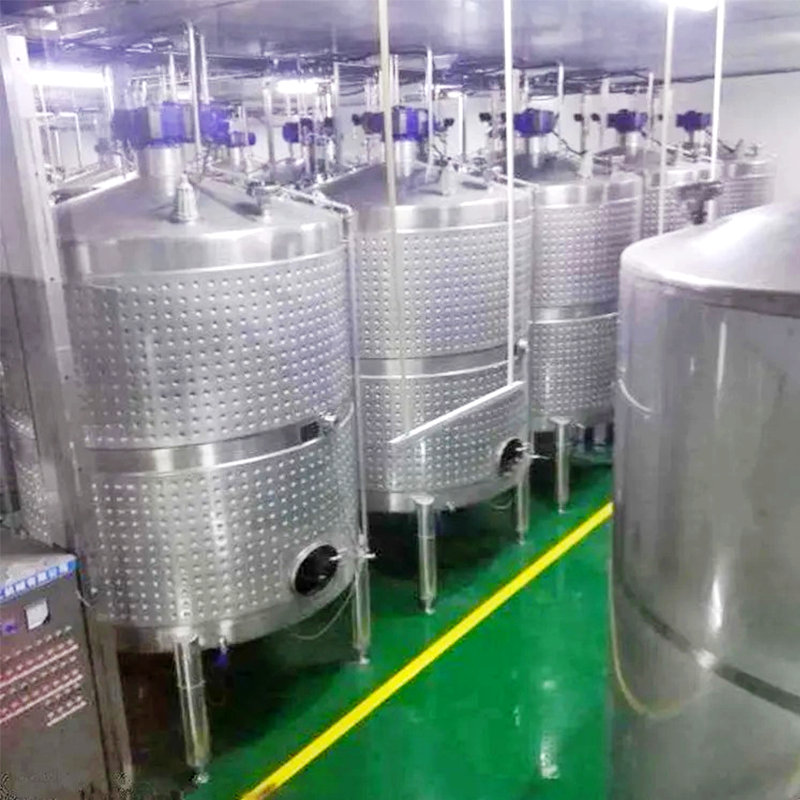
A stainless steel mixing tank is an engineered vessel designed to combine ingredients or process materials under controlled conditions. It usually includes a tank body, mixing agitator, motor, shaft, seals, support frame or legs, inlet and outlet ports, and optional temperature-control features such as heating jackets or cooling jackets.
The primary purpose of a stainless steel mixing tank is to create uniformity in a product batch. Depending on the application, the tank may be used to:
- Blend liquids with liquids
- Disperse powders into liquids
- Maintain suspension of solids
- Prevent separation or settling
- Dissolve ingredients efficiently
- Support chemical reactions
- Control product temperature during processing
Because stainless steel is hygienic, durable, and highly customizable, the stainless steel mixing tank is a preferred solution in industries where product quality, process consistency, and sanitation are critical.
Why Stainless Steel Is the Preferred Material
Stainless steel is widely chosen for mixing tanks because it combines strength, hygiene, and resistance to corrosion. The most common stainless steel grades used in mixing tank manufacturing are 304 and 316L.
304 stainless steel is a popular general-purpose material suitable for many food, beverage, and industrial mixing applications. 316L stainless steel offers enhanced resistance to chemicals, acids, salts, and harsh cleaning agents, making it preferred for pharmaceutical, cosmetic, and aggressive chemical environments.
Key reasons buyers choose stainless steel include:
- High corrosion resistance
- Long service life
- Easy cleaning and sanitation
- Strong mechanical performance
- Compatibility with hygienic standards
- Reduced contamination risk
- Professional appearance and surface finish options
In addition, stainless steel can be fabricated into many shapes and configurations, allowing manufacturers and suppliers to deliver custom tanks based on process requirements, space limitations, and industry regulations.
Common Applications of Stainless Steel Mixing Tanks
The demand for stainless steel mixing tank systems is broad because many industries require controlled and reliable blending. Below are the most common application areas.
Food and Beverage
In food and beverage production, stainless steel mixing tanks are used for sauces, syrups, dairy products, beverages, flavor blends, dressings, and ingredient preparation. Hygienic design is essential to reduce contamination and support food safety compliance.
Dairy Processing
Dairy processing requires tanks that can handle milk, cream, yogurt, whey, and other sensitive products. A stainless steel mixing tank helps maintain product consistency and supports heating, cooling, and agitation during processing.
Pharmaceutical Industry
Pharmaceutical applications demand highly polished surfaces, precise construction, and cleanable designs. Stainless steel mixing tanks are used for liquid medicines, suspensions, ointments, and sterile or semi-sterile formulations.
Cosmetics and Personal Care
Cosmetic producers use stainless steel mixing tanks for lotions, creams, shampoos, gels, emulsions, and skincare products. Uniform mixing and gentle agitation are often important for maintaining texture and stability.
Chemical Processing
In chemical manufacturing, tanks may be used for blending solutions, preparing reagents, or supporting chemical reactions. Material selection must consider the chemical compatibility of the product, cleaning agents, and operating temperature.
Water Treatment and Industrial Utilities
Stainless steel tanks are also used for treatment chemicals, pH adjustment solutions, additives, and process water preparation. Their durability makes them suitable for demanding operating conditions.
Main Advantages of a Stainless Steel Mixing Tank
Choosing a high-quality stainless steel mixing tank provides several important benefits. These advantages influence not only product performance but also long-term ownership cost.
Advantage |
Description |
Business Benefit |
|---|
Corrosion Resistance |
Stainless steel resists rust and chemical attack under many operating conditions. |
Longer tank life and lower replacement risk. |
Hygienic Surface |
Polished stainless steel surfaces are easy to clean and sanitize. |
Supports product safety and compliance. |
Durability |
Stainless steel offers strong mechanical strength and wear resistance. |
Suitable for continuous industrial operation. |
Customizable Design |
Can be fabricated in different shapes, volumes, and configurations. |
Adapts to many process requirements. |
Temperature Control |
Can be equipped with heating or cooling jackets. |
Supports sensitive product processing. |
Professional Appearance |
Clean, modern finish suitable for visible production areas. |
Improves facility presentation. |
Low Maintenance |
Easy to inspect, clean, and maintain with proper operation. |
Reduces operating downtime. |
Typical Stainless Steel Mixing Tank Construction
A stainless steel mixing tank may appear simple from the outside, but its construction involves several important components. The quality of each component affects mixing performance, hygiene, service life, and ease of maintenance.
1. Tank Body
The tank body is the main vessel that holds the product. It may be cylindrical, vertical, horizontal, conical, or specially shaped depending on process needs. Common features include flat or dished bottoms, sloped bottoms for drainage, and top openings for loading or inspection.
2. Agitator or Mixing System
The agitator is the core mechanical component responsible for mixing. Common types include propeller mixers, paddle mixers, anchor mixers, turbine mixers, and high-shear mixers. The choice depends on viscosity, batch size, and desired mixing effect.
3. Motor and Drive Unit
The motor powers the agitator. Gear reducers, variable frequency drives, and speed controllers are often used to adjust performance and improve process flexibility.
4. Shaft and Impeller
The shaft connects the drive system to the mixing impeller. It must be aligned correctly and manufactured with sufficient rigidity to avoid vibration and uneven mixing.
5. Seals and Bearings
High-quality seals are important to prevent leakage and contamination. Bearings support moving parts and help maintain smooth operation. For sanitary or chemical applications, seal selection is especially important.
6. Ports and Fittings
Tanks usually include inlet ports, outlet ports, vent ports, sampling ports, manways, CIP spray balls, thermowells, and instrument connections. These fittings should be positioned for easy operation and maintenance.
7. Support Structure
Support legs, base frames, or platforms provide stability. For larger systems, support structures may be reinforced to manage weight and vibration during operation.
Common Stainless Steel Grades for Mixing Tanks
Understanding material grade is essential when comparing manufacturers and suppliers of stainless steel mixing tanks. Not every tank is built for the same environment.
Grade |
Main Characteristics |
Typical Applications |
|---|
304 Stainless Steel |
Good corrosion resistance, cost-effective, widely available. |
Food, beverage, water, general industrial use. |
316 Stainless Steel |
Better resistance to chlorides and harsher chemicals. |
Chemical processing, marine environments, some hygienic uses. |
316L Stainless Steel |
Low carbon version of 316, improved weldability and corrosion performance. |
Pharmaceutical, cosmetic, high-purity, sanitary applications. |
Duplex Stainless Steel |
Higher strength and excellent corrosion resistance. |
Specialized industrial and aggressive process environments. |
When evaluating a stainless steel mixing tank, buyers should always confirm the exact grade used for the tank shell, internal wetted parts, agitator, and optional accessories. Material traceability and certificates may be required in regulated industries.
Key Specifications to Compare Before Requesting Quotes
To obtain accurate quotes from manufacturers and suppliers, it is important to define technical requirements clearly. The more precise your specification, the more accurate the quotation and the lower the risk of mismatched equipment.
Specification Item |
Why It Matters |
Typical Options |
|---|
Tank Capacity |
Determines batch size and production throughput. |
50L, 100L, 500L, 1000L, 5000L, custom sizes |
Material Grade |
Affects corrosion resistance and chemical compatibility. |
304, 316, 316L |
Mixing Type |
Impacts blending efficiency and product quality. |
Top-entry, side-entry, bottom-entry |
Agitator Style |
Influences shear, circulation, and mixing uniformity. |
Propeller, paddle, anchor, turbine, high-shear |
Working Pressure |
Important for pressurized or vacuum processing. |
Atmospheric, low pressure, vacuum-rated |
Temperature Range |
Determines jacket design and insulation needs. |
Ambient, heated, cooled, insulated |
Surface Finish |
Critical for sanitation and cleanability. |
Mirror polish, satin finish, pickled and passivated |
CIP/SIP Compatibility |
Essential for hygienic and sterile applications. |
Yes or no, depending on process |
Electrical Requirements |
Needed for motor and control system compatibility. |
220V, 380V, 415V, 50Hz, 60Hz |
Customization Level |
Determines fabrication complexity and lead time. |
Standard or fully custom |
Types of Stainless Steel Mixing Tanks
There are many types of stainless steel mixing tanks depending on the application and the mixing method required. Below are some of the most common classifications.
Atmospheric Mixing Tanks
These are open or closed tanks operating at normal pressure. They are suitable for many liquid blending applications and are commonly used when pressure control is not needed.
Jacketed Mixing Tanks
Jacketed tanks have an outer layer designed to circulate heating or cooling media. This helps control the product temperature during mixing and is common in food, cosmetic, and chemical industries.
Vacuum Mixing Tanks
Vacuum mixing tanks are designed to operate under reduced pressure. They help remove bubbles, improve product density, and support certain high-end cosmetic or pharmaceutical processes.
High-Shear Mixing Tanks
These tanks are equipped with high-shear mixers to break down particles, create fine emulsions, or improve dispersion. They are used where intense blending is required.
Agitated Storage Tanks
These tanks keep products in motion to prevent settling or separation. They are useful for sauces, suspensions, and ingredients that must remain uniform before filling or transfer.
Sanitary Mixing Tanks
Sanitary tanks are designed with hygienic construction, smooth welds, drainable geometry, and cleanable fittings. They are widely used in food, dairy, beverage, and pharmaceutical production.
How Manufacturers and Suppliers Usually Build Quality Assured Tanks
When searching for stainless steel mixing tank manufacturers or suppliers, buyers often look for quality assurance. Although every factory may have different procedures, reliable production typically includes several important steps.
- Material inspection and certificate review
- Cutting, forming, and precision fabrication
- Welding by qualified technicians
- Polishing and surface finishing
- Assembly of agitators and mechanical components
- Leak testing and dimensional checks
- Electrical inspection and drive testing
- Final cleaning, packaging, and shipment preparation
Quality assured stainless steel mixing tank production may also include detailed process documentation, weld maps, pressure testing, passivation reports, and material traceability records. For regulated industries, documentation is often just as important as physical equipment quality.
What to Ask When Requesting Stainless Steel Mixing Tank Quotes
Getting a quote is not only about price. A professional quotation should reflect the tank’s technical scope, quality level, and delivery terms. Whether you are sourcing from a local supplier or an international manufacturer, ask the following questions before comparing offers.
Question |
Reason |
|---|
What material grade is used for wetted parts? |
Ensures correct corrosion resistance and compliance. |
Is the mixing tank custom or standard? |
Impacts price, lead time, and design flexibility. |
What agitator type is included? |
Confirms mixing performance for your product. |
Does the quote include motor, gearbox, and controls? |
Avoids hidden costs and incomplete scope. |
Is surface finishing included? |
Important for sanitary or polished requirements. |
Are testing and inspection reports included? |
Supports quality assurance and acceptance. |
What are the shipping and packing terms? |
Affects total landed cost and equipment protection. |
What is the estimated lead time? |
Important for project planning and delivery schedules. |
Is after-sales support available? |
Helps with installation, operation, and maintenance. |
Factors That Affect Stainless Steel Mixing Tank Price
The price of a stainless steel mixing tank can vary significantly based on size, design complexity, material grade, and process requirements. Buyers who understand these cost drivers are better prepared to compare quotes effectively.
1. Tank Volume
Larger tanks use more material and may require stronger support structures, more powerful motors, and additional fabrication time. As capacity increases, price typically increases as well.
2. Material Selection
316L stainless steel usually costs more than 304 stainless steel. Special alloys or thicker material specifications also increase the final quotation.
3. Mixing System Complexity
A simple low-speed mixer is usually more affordable than a high-shear or vacuum mixing system. Advanced mixing performance often requires more engineering and more expensive components.
4. Surface Finish
High-polish or sanitary-grade internal finishes require additional processing. The more demanding the surface requirement, the more it can influence price.
5. Heating or Cooling Features
Jacketed tanks, insulation layers, temperature sensors, and related controls add cost. These features are valuable but should be specified only when needed.
6. Automation and Controls
Manual systems are usually less expensive than automated tanks equipped with PLC controls, variable speed drives, level sensors, temperature monitors, and remote operation functions.
7. Certification and Testing
Special inspection, pressure testing, documentation, and compliance requirements can increase the quote, especially for pharmaceutical and high-purity applications.
Selection Guide: How to Choose the Right Mixing Tank
Choosing the right stainless steel mixing tank begins with a clear understanding of the product being processed. Consider the following selection factors:
- Product viscosity: Thin liquids and thick pastes need different agitators.
- Batch size: The tank should match production volume and overflow margin.
- Temperature sensitivity: Some products need heating, cooling, or insulation.
- Sanitary requirements: Food, cosmetic, and pharmaceutical products need cleanable design.
- Chemical compatibility: Tank material must resist the product and cleaning agents.
- Mixing goal: Blending, suspension, dispersion, or emulsification may require different impellers.
- Space constraints: Tank orientation and footprint must fit the facility.
- Maintenance access: Manways, drains, and removable components simplify servicing.
For best results, buyers should provide product viscosity, operating temperature, batch volume, mixing objective, and layout drawings when requesting recommendations or quotes from manufacturers and suppliers.
Surface Finish and Hygiene Considerations
Surface quality is a major factor in stainless steel mixing tank performance. In many industries, the internal surface finish directly affects product cleanliness, residue buildup, and ease of washing.
Common finish options include:
- Mill finish: Suitable for some industrial applications
- Satin finish: Balanced appearance and practicality
- Polished finish: Used where smoothness and cleanliness matter
- Mirror finish: Preferred for high-hygiene applications
- Pickled and passivated: Helps restore corrosion resistance after fabrication
Sanitary stainless steel mixing tanks often feature smooth internal welds, rounded corners, full drainage design, and minimized dead zones. These design details help reduce contamination risk and support efficient cleaning-in-place operations.
Customization Options for Stainless Steel Mixing Tanks
One reason stainless steel mixing tank products are so widely used is the flexibility of customization. A supplier may offer many optional features based on industry and process needs.
Customization Option |
Purpose |
Typical Use |
|---|
Heating Jacket |
Controls product temperature during mixing. |
Food, cosmetics, chemicals |
Cooling Jacket |
Removes heat or maintains low temperature. |
Pharmaceutical, beverage, chemical |
Insulation Layer |
Reduces heat loss or gain. |
Temperature-sensitive processing |
CIP Spray Ball |
Supports automated cleaning. |
Hygienic production lines |
Load Cells |
Measures weight inside the tank. |
Batch control and recipe management |
Level Sensors |
Monitors filling and emptying. |
Process automation |
Variable Speed Drive |
Adjusts agitator speed. |
Flexible mixing requirements |
Control Panel |
Manages mixer and system functions. |
Manual or automated operation |
Industries That Commonly Need Stainless Steel Mixing Tanks
Demand for stainless steel mixing tank equipment continues to grow because process industries require stable, repeatable results. The following sectors are among the most common buyers:
- Food and beverage manufacturing
- Dairy processing and ingredient blending
- Pharmaceutical and biotechnology production
- Cosmetic and personal care formulation
- Detergent and cleaning product manufacturing
- Paints, coatings, and inks
- Fine chemicals and specialty chemicals
- Water treatment and industrial process utilities
Each industry may require a different balance of hygiene, corrosion resistance, agitation intensity, and automation. This is why one universal design does not suit every operation.
Maintenance Tips for Long Service Life
Even the best stainless steel mixing tank requires proper maintenance. Routine care extends service life, protects product quality, and lowers repair costs.
- Clean tanks according to the process schedule
- Inspect seals, gaskets, and fittings regularly
- Check motor and gearbox performance
- Verify impeller alignment and shaft stability
- Avoid incompatible cleaning chemicals
- Prevent surface damage from hard tools or rough handling
- Drain and dry the tank when not in use, if appropriate
- Perform periodic inspection of welds and structural parts
For sanitary applications, proper cleaning procedures are essential. For chemical applications, maintenance should also include review of corrosion signs, seal compatibility, and any product residue accumulation.
Frequently Asked Questions About Stainless Steel Mixing Tanks
What is the best stainless steel grade for a mixing tank?
It depends on the application. 304 is suitable for many general uses, while 316L is often preferred for more demanding sanitary or chemical environments.
Can a stainless steel mixing tank handle thick materials?
Yes, but the agitator design must match product viscosity. Thick materials usually require anchor, paddle, or high-torque mixing systems.
Are stainless steel mixing tanks easy to clean?
Yes, stainless steel is one of the easiest materials to clean when properly fabricated and finished. Sanitary design improves cleanability further.
Can mixing tanks include heating and cooling?
Yes. Many stainless steel mixing tanks are jacketed to support temperature control during processing.
How do I compare quotes from different suppliers?
Compare material grade, tank capacity, agitator type, surface finish, testing, accessories, lead time, and after-sales service—not price alone.
Sample Stainless Steel Mixing Tank Specification Table
The table below shows a general example of how product specifications may be presented on a directory page, blog, or quote request form.
Item |
Example Specification |
|---|
Product Name |
Stainless Steel Mixing Tank |
Material |
304 / 316L Stainless Steel |
Capacity |
100L to 10,000L or custom |
Tank Shape |
Vertical cylindrical |
Agitator Type |
Propeller / paddle / anchor / high-shear |
Surface Finish |
Polished or sanitary grade |
Heating Method |
Steam, electric, or hot water jacket |
Cooling Method |
Water or glycol jacket |
Cleaning Method |
Manual clean or CIP capable |
Applications |
Food, beverage, pharma, cosmetic, chemical |
Conclusion
A stainless steel mixing tank is an essential piece of process equipment for industries that require reliable blending, hygienic handling, and long-term durability. When evaluating manufacturers, suppliers, and quotes, buyers should focus on technical specifications, material grade, surface finish, agitator selection, and quality assurance rather than price alone.
By understanding the structure, applications, advantages, and customization options of a stainless steel mixing tank, you can make a better purchasing decision and ensure the equipment matches your production goals. Whether your project involves food, beverage, dairy, cosmetics, pharmaceuticals, or chemicals, the right tank design can significantly improve efficiency, product consistency, and operational safety.
If you are building an SEO-focused industry page, this topic naturally supports keywords such as stainless steel mixing tank, stainless steel mixing tank manufacturers, stainless steel mixing tank suppliers, stainless steel mixing tank quotes, quality assured mixing tanks, and custom stainless steel mixing tank. Using clear headings, structured tables, and product-focused terminology can help improve visibility and relevance in search engine results.
```
 +86 29-87031531





 Điện thoại
Bình luận
(0)